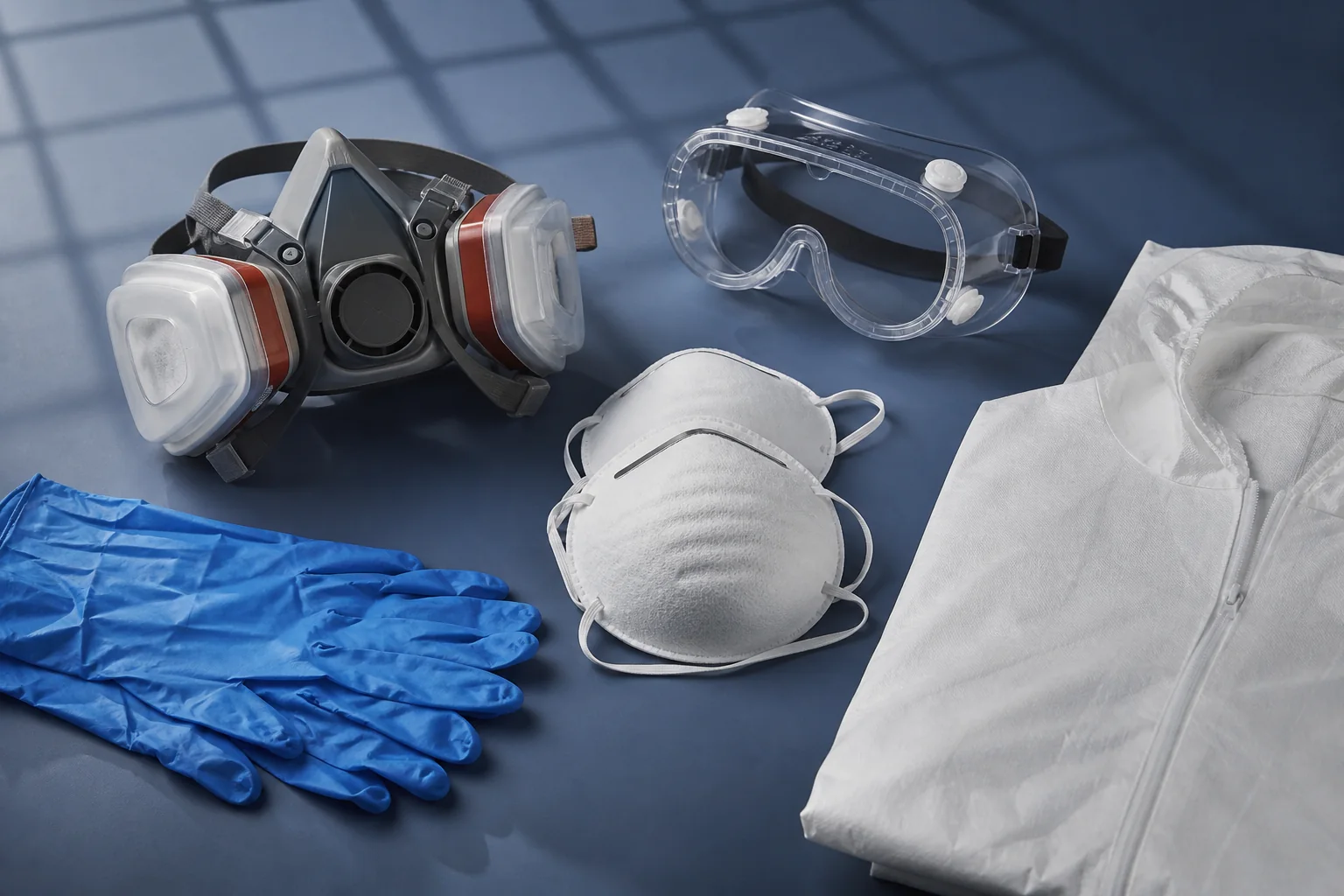
FFP2 and FFP3 masks filter particles and certain aerosols provided they are properly fitted. They can help against contaminated dust or biological scenarios, but they do not protect against chemical gases and vapors which require suitable filters.
The mask responds to a specific route of exposure
FFP2 and FFP3 are sought to limit the inhalation of particles or aerosols. They are useful in certain biological scenarios, contaminated dust, wet cleaning or general respiratory protection when the contaminant is particulate.
They are not universal protections. A gas, a chemical vapor, an oxygen-depleted atmosphere or an unknown product cannot be managed with a simple filtering mask. Cartridges, full masks or specialized devices are a choice linked to the substance and the risk assessment.
The fit is as important as the standard. Beard, humidity, poor positioning, damaged mask or prolonged use can significantly reduce protection.
FFP2 or FFP3: how to decide
FFP3 offers a higher level of particle filtration than FFP2, but it may be less comfortable and must remain snug. For suspicious dust, more intense exposure, or risky cleaning, it may be best when available and properly worn.
FFP2 remains relevant for more common uses of reducing exposure to aerosols and particles. It must be associated with ventilation, hygiene, limitation of exposure and correct removal after use.
In a kit, providing several sizes or models can be more useful than stocking a single mask that is theoretically efficient but poorly suited to faces.
Comfort and fit matter as much as filtration
A mask that performs well on paper can lose a large part of its interest if it lets air pass through the sides. The shape of the face, the beard, the position of the elastics and the nose clip influence the tightness. For regular or professional use, a fit test provides much more reliable information than a simple online opinion.
Prolonged wearing also causes heat, humidity and discomfort. You must plan for breaks in a safe place, follow the instructions and replace a mask that has become damp, dirty, damaged or difficult to breathe. A model that can be tolerated for a few minutes is not necessarily suitable for a long task.
Keep masks clean, dry and in their packaging. Note the date of purchase and monitor the condition of the elastics. If the danger is unknown, if a strong odor is present or if the atmosphere lacks oxygen, an FFP2 or FFP3 will never allow you to enter or stay on site.
Fit test and user seal check: two different checks
A high-performing filter cannot compensate for a leak between the face and mask. For tight-fitting facepieces, a fit test helps select a model and size for a particular wearer. A competent operator must follow a suitable protocol.
Perform the user seal check each time the mask is put on, following its instructions. It does not replace a fit test. Facial hair in the seal area, spectacle arms or other equipment can disrupt contact; assess the complete combination worn.
| Check | When? | What it establishes |
|---|---|---|
| Fit test | When selecting the model; reassess after changes to the face or equipment. | Whether that model and size fit the person tested. |
| User seal check | Every time the mask is put on, following the manufacturer’s instructions. | No leak detected by that check at that moment; no guarantee for a different hazard. |
INRS · Protection respiratoire : réaliser des essais d’ajustement (ED 6273)
Filtering or supplied air: where does breathing air come from?
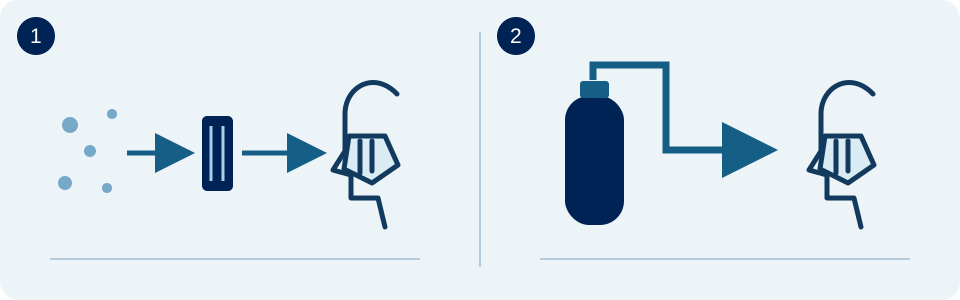
A filtering respirator uses ambient air and only removes contaminants covered by its filter. It does not supply oxygen. An atmosphere-supplying respirator provides breathing air from a source independent of the contaminated atmosphere.
This distinction does not let you select equipment on your own for a fire, a confined space or an unknown substance. Atmospheric assessment, training and rescue arrangements remain necessary. An FFP mask targets particles, not gases or vapours.
Useful data at a glance
Orders of magnitude and simple controls to adapt to your situation. Local instructions always remain a priority.

FFP compared
FFP2 and FFP3 filter particles with different performances.

At every port
Escape to the face greatly reduces protection.
FFP protection
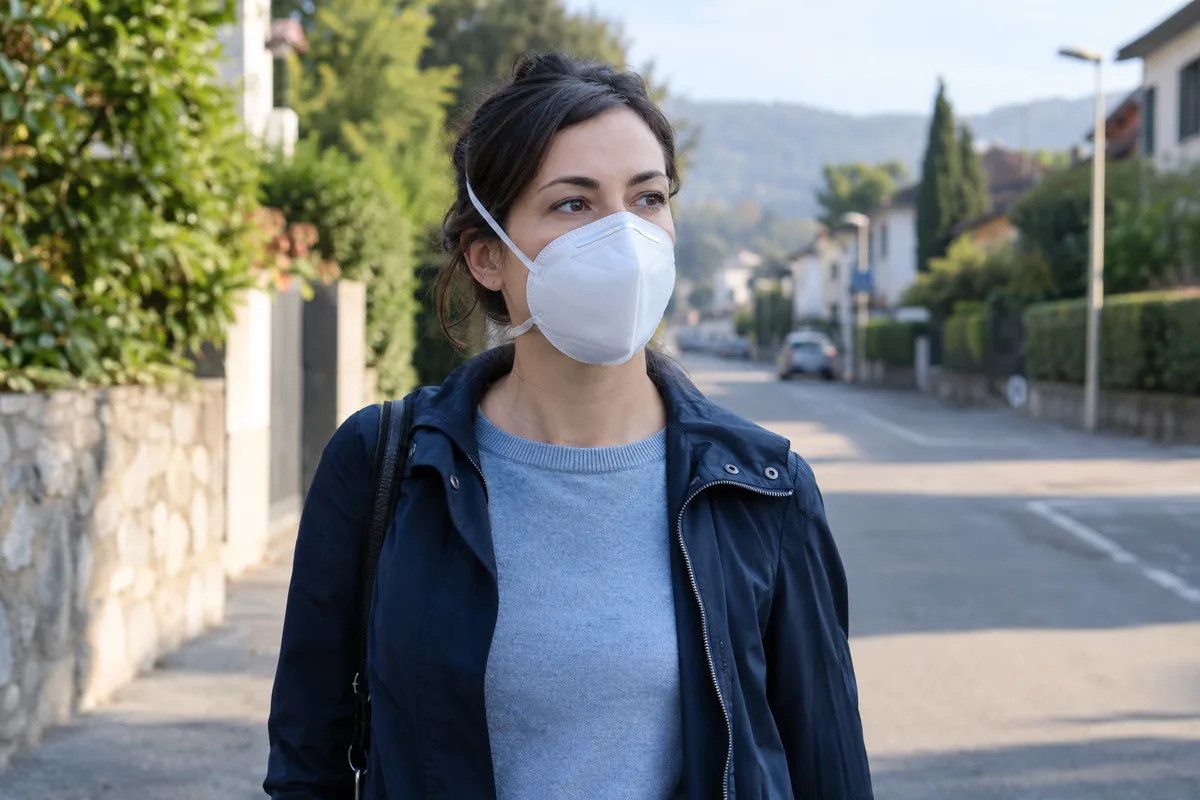
An FFP does not replace a filter intended for an identified gas.
Quick check before you need it
- Check class, marking and date
- Choose a shape adapted to the face
- Carry out the adjustment check
- Replace if damp, dirty or damaged
- Leave the area if breathing becomes difficult
Recommended situations and routes

Cellar or attic dust
FFP2/FFP3, gloves, glasses, humidification, gentle cleaning and closed waste bags.
Deep: Cellar or attic dust
Gas or strong odor
An FFP2 is not enough. You must identify the substance or move away and alert.
Deep: Gas or strong odor
Company stock
Plan sizes, wearing procedure, duration, replacement and regular check.
Dry deeper: Corporate stock
FAQ Respiratory protection
Quick responses to compare uses, limits and protection priorities.
Is FFP3 still better than FFP2?
It filters more particles, but only if it is worn well, adapted to the face and compatible with the effort required.
Does FFP2 protect against solvents?
No. Solvent vapors require respiratory protection adapted to the contaminant, not a simple particulate filter.
Should a mask be thrown away after contamination?
In a contaminating context, you must follow the manufacturer's instructions and the internal procedure. A soiled disposable mask should not be handled like a clean object.
Can you wear an FFP2 with a beard?
A beard located on the contact area can prevent a good seal. In a professional context, evaluation and fit testing must guide the choice.
References used for this guide
 INRS - Protective equipment individual
Reminder that PPE complements risk elimination or reduction measures and must be adapted to the work context.
INRS - Individual protection against chemical risks
Choice of chemical PPE after risk assessment, limits of protection and need for suitable gloves, glasses, clothing or respiratory devices.
 Ministry of Health - Hantavirus and FHSR
Transmission mainly associated with rodents, contaminated dust and medical conduct in the event of symptoms after exposure.