
Read the alert and check the affected area
Identify the authority, the risk, the area concerned and the time of the message.
Practical guides for preparing your home, comparing really useful equipment and adopting the right reflexes in the face of cuts, fires, evacuations and risks CBRN : chimiques, biologiques, radiologiques et nucléaires, aussi appelés NRBC. The objective: to move forward methodically, without unnecessary fear, with simple solutions that the whole family can understand.
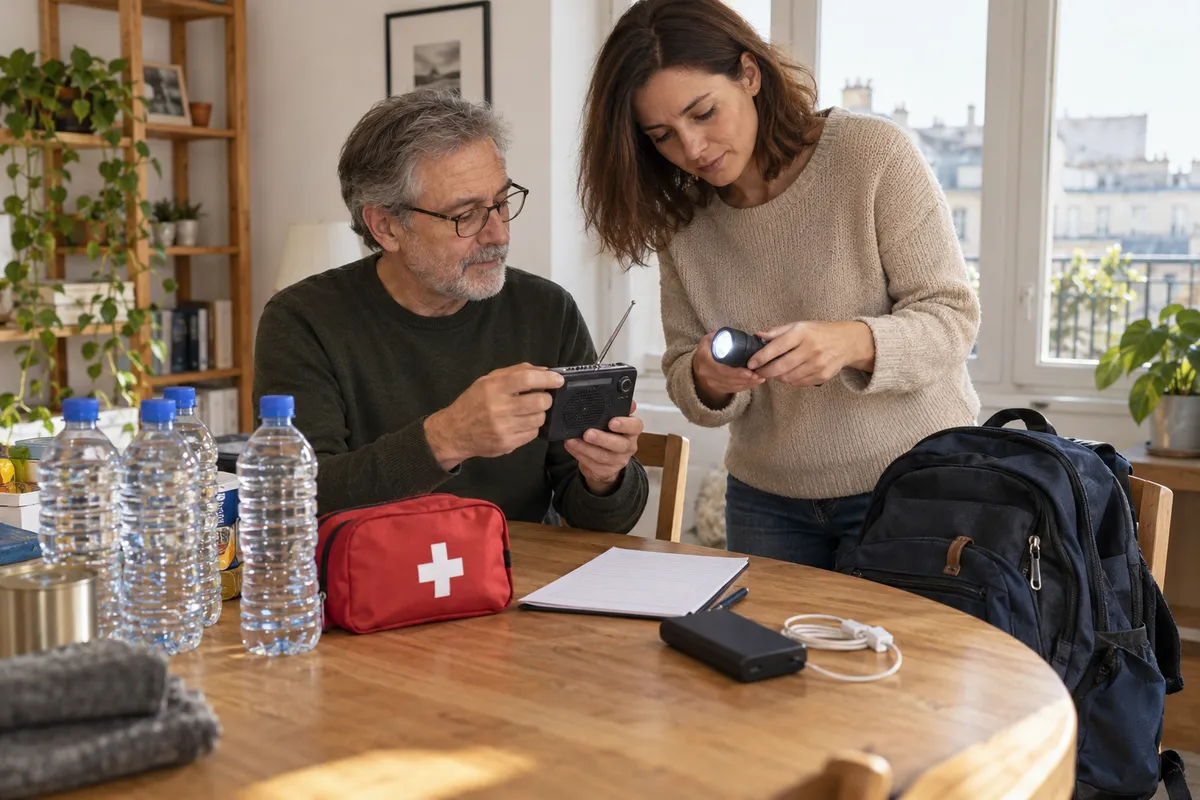
The course of action always depends on the official message. Read the alert completely, do not approach the dangerous area and apply the instructions received : shelter, evacuation or other measure : until the end of the alert.
Identify the authority, the risk, the area concerned and the time of the message.
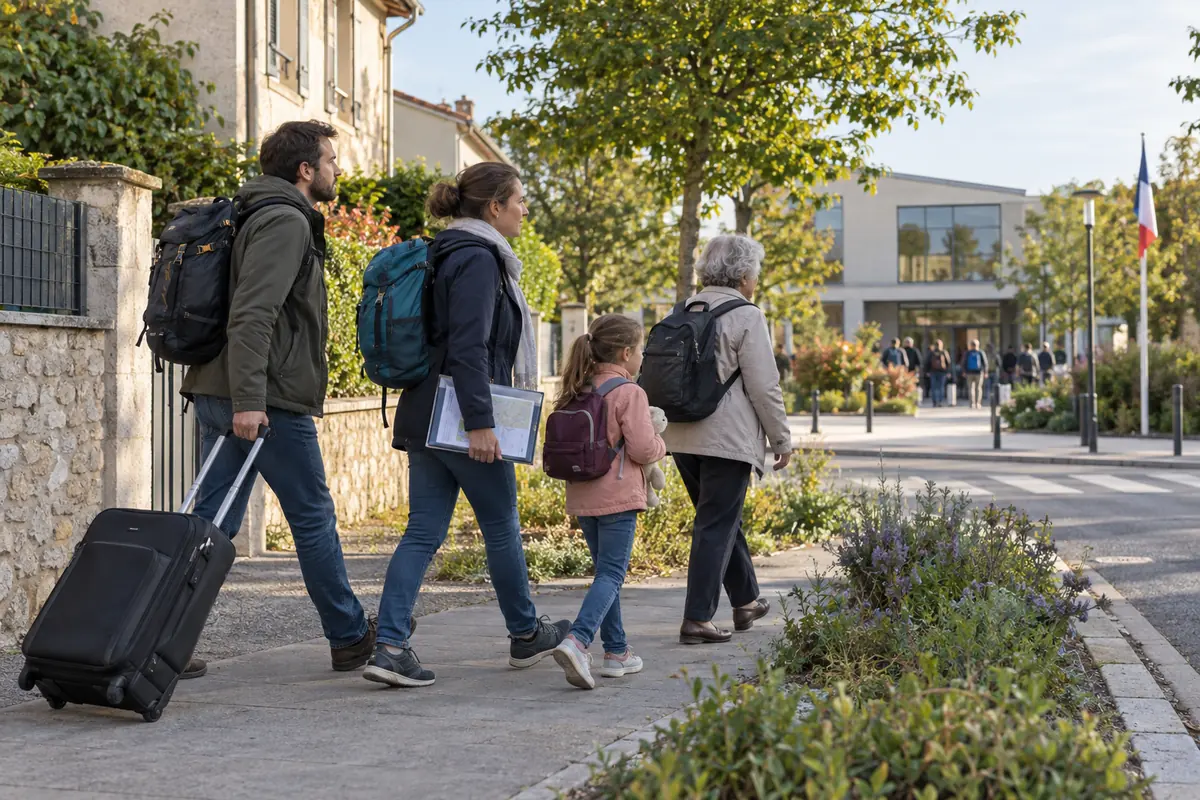
Follow the sheltering or evacuation instructions precisely, without improvising.

Consult FR-Alert, the prefecture, town hall, radio or emergency services depending on the situation.
References checked with the official presentation of FR-Alert. In case of immediate danger: 15, 18 or 112.
Each section is based on a concrete situation experienced by an individual, a family or a professional: understanding the risk, knowing what to do first, prioritizing purchases, comparing brands and avoiding bad reflexes. The explanations also remind us of the limits of the equipment and the essential place of official instructions.
The section visuals are AI-generated illustrations.
 72-hour survivalism
Water, food, radio, light, care, documents, progressive budget.
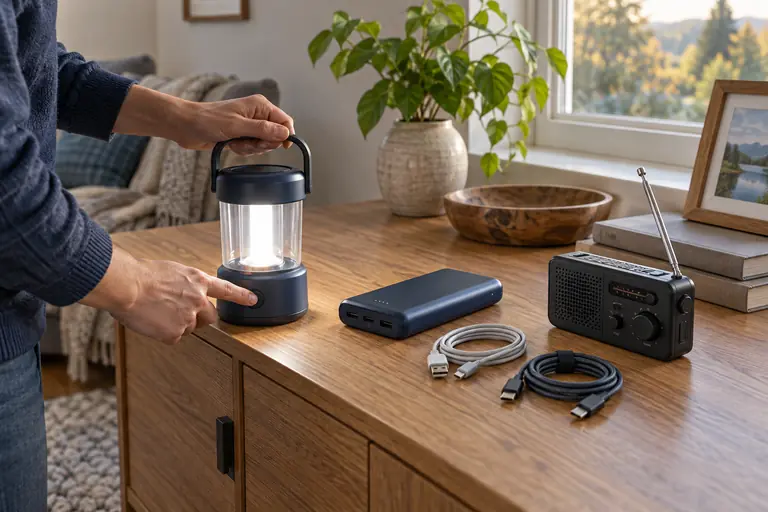 Water, energy, communication
Reserves, filtration, lamps, batteries, radio, contacts and family continuity.
 Home security
Detectors, fire extinguishers, documents, lighting, insurance and evacuation.
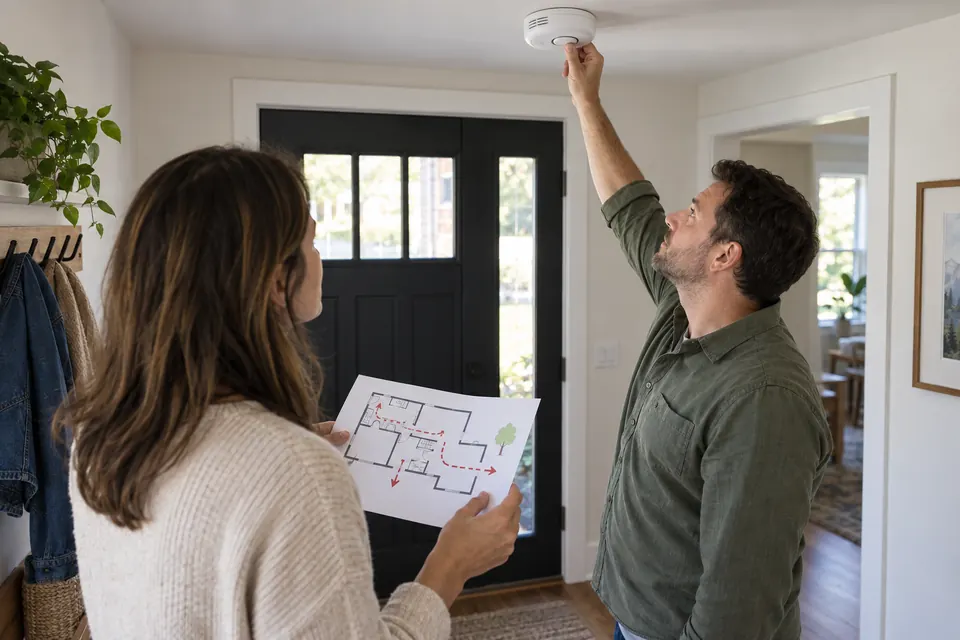 Fires and smoke
Evacuation, sheltering, DAAF, smoke, forest fires and fire kit.
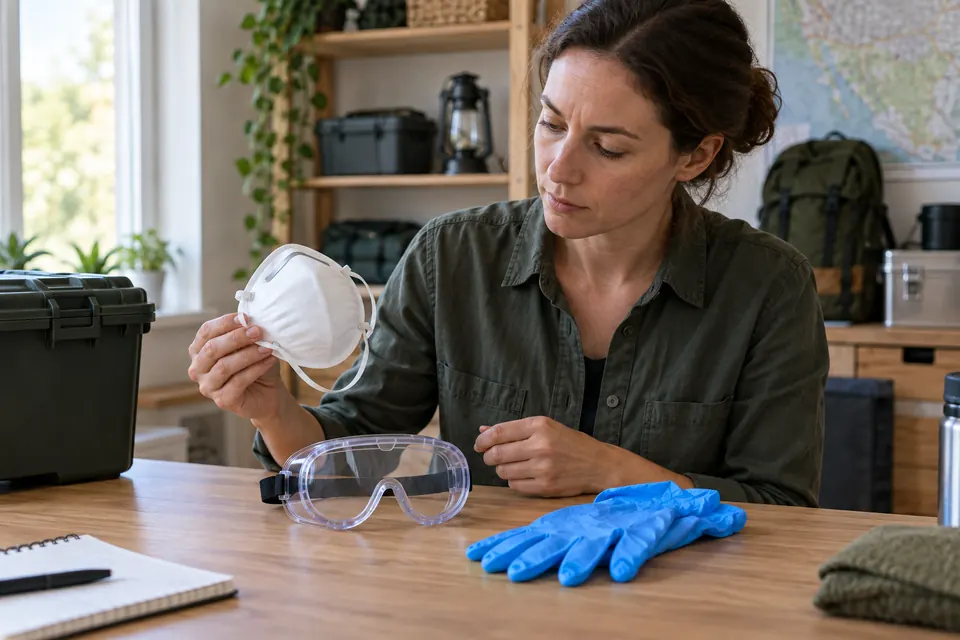 PPE / CBRN criteria
Respiratory, gloves, glasses, hygiene, limits and compatibility.
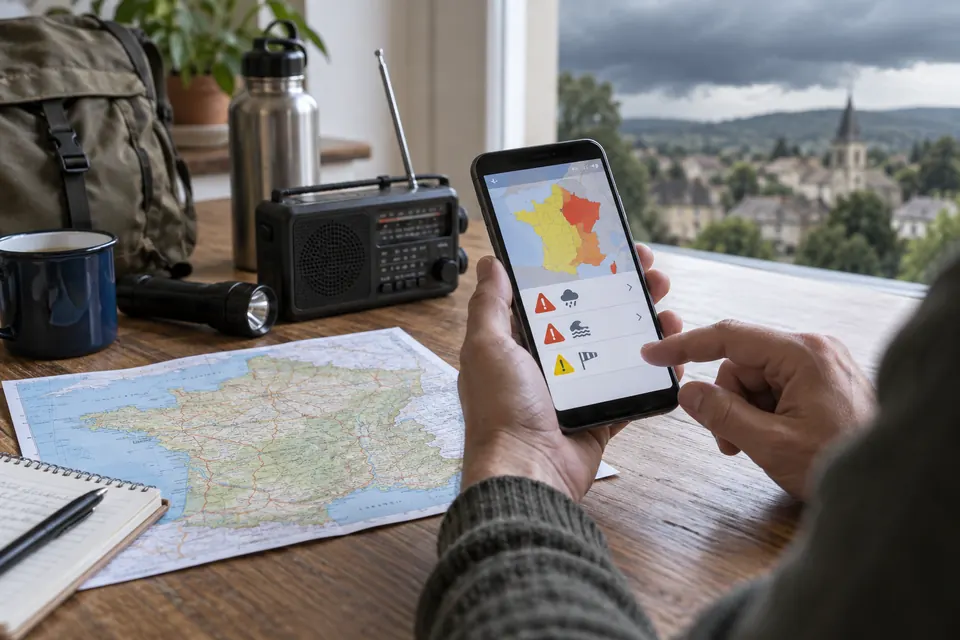 Alerts and emergency services
External flows, numbers useful, prefectures, public organizations and alerts.
The brands are grouped by use in order to help everyone check standards, availability, return conditions and quality of service before any purchase.
Size the water reserve, add the needs specific to your household and check what is already ready. Your choices remain only in this browser.

For 1 person for 72 hours, before adaptation to heat and special needs.
Your choices are saved in this browser. On a shared device, use Reset to clear the checklist before leaving.
Short answers to check an essential point, with links to detailed guides when the situation requires it.
CBRN designates chemical, biological, radiological and nuclear risks. In French, the acronym NRBC presents the same families in a different order: nuclear, radiological, biological and chemical.
Read the entire message, check the area concerned and apply the indicated instructions: shelter, evacuation or other safety measure. Do not approach danger and follow updates from the issuing authority.
The basics include water, non-cooking food, a battery-powered radio, a lamp, usual treatments, a first aid kit, warm clothes, copies of documents, keys and a phone charger.
Civil Security indicates 6 liters of drinking water per person in bottles for the emergency kit. This basis must be adapted to the heat, age, state of health and particular needs of the household.
No. An FFP mask filters particles but does not protect against gases, chemical vapors, carbon monoxide or an atmosphere poor in oxygen. An unknown substance requires distancing and emergency services instructions.
Only on instructions from the authorities. Stable iodine only protects the thyroid against certain releases of radioactive iodine; it does not protect against other radioactive substances or external irradiation.
Risks and instructions vary depending on the territory. The guide helps households, communities, businesses and ERPs find official sources and prepare a proportionate response.