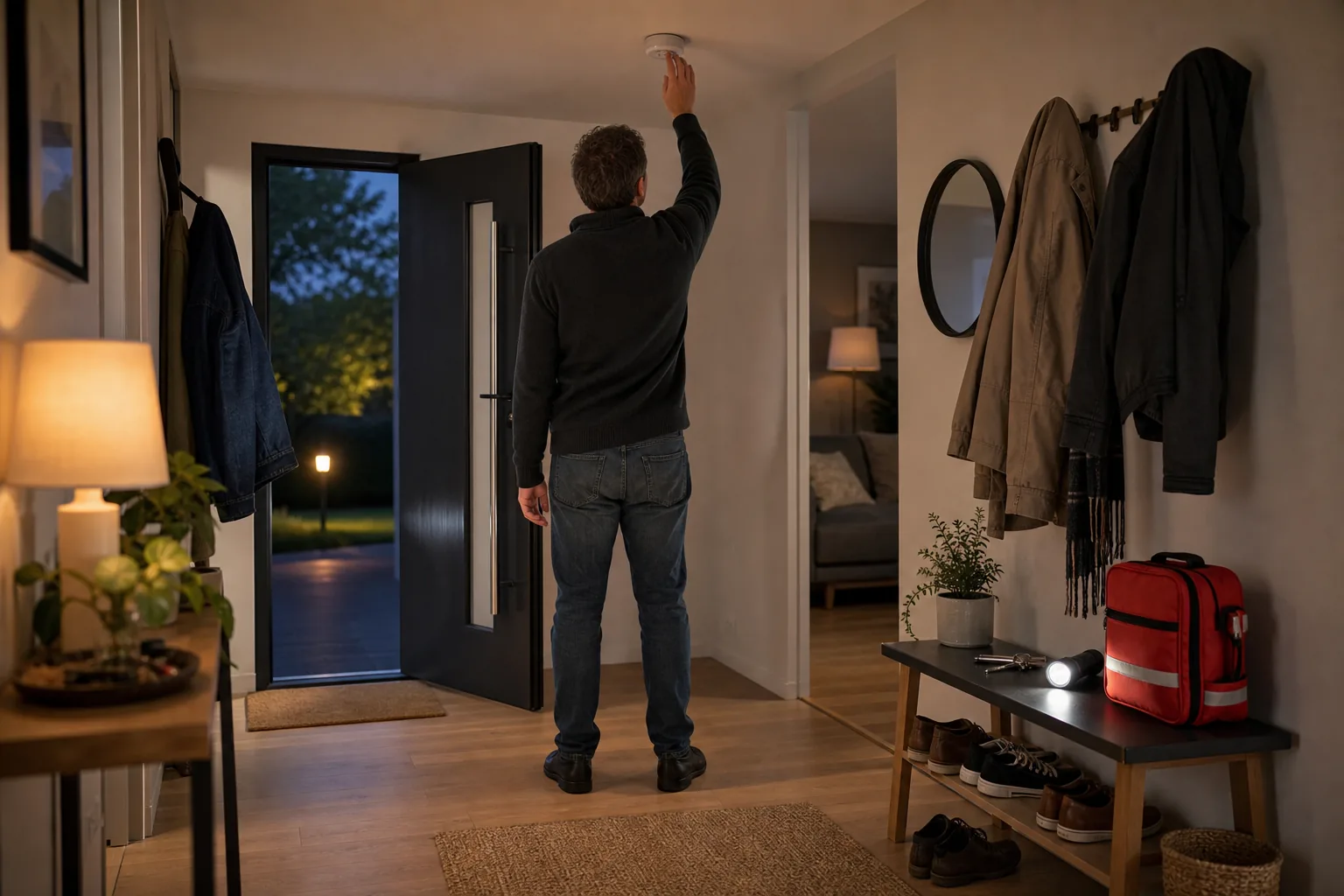
Si le feu prend chez vous et que la sortie est praticable, évacuez sans ascenseur et fermez la porte derrière vous sans la verrouiller. Si le feu est à l’extérieur du logement et que l’escalier est enfumé, restez derrière une porte fermée et signalez-vous à la fenêtre. Dans les deux cas, appelez le 18 ou le 112 dès que vous êtes à l’abri.
Les gestes à suivre selon l’emplacement du feu
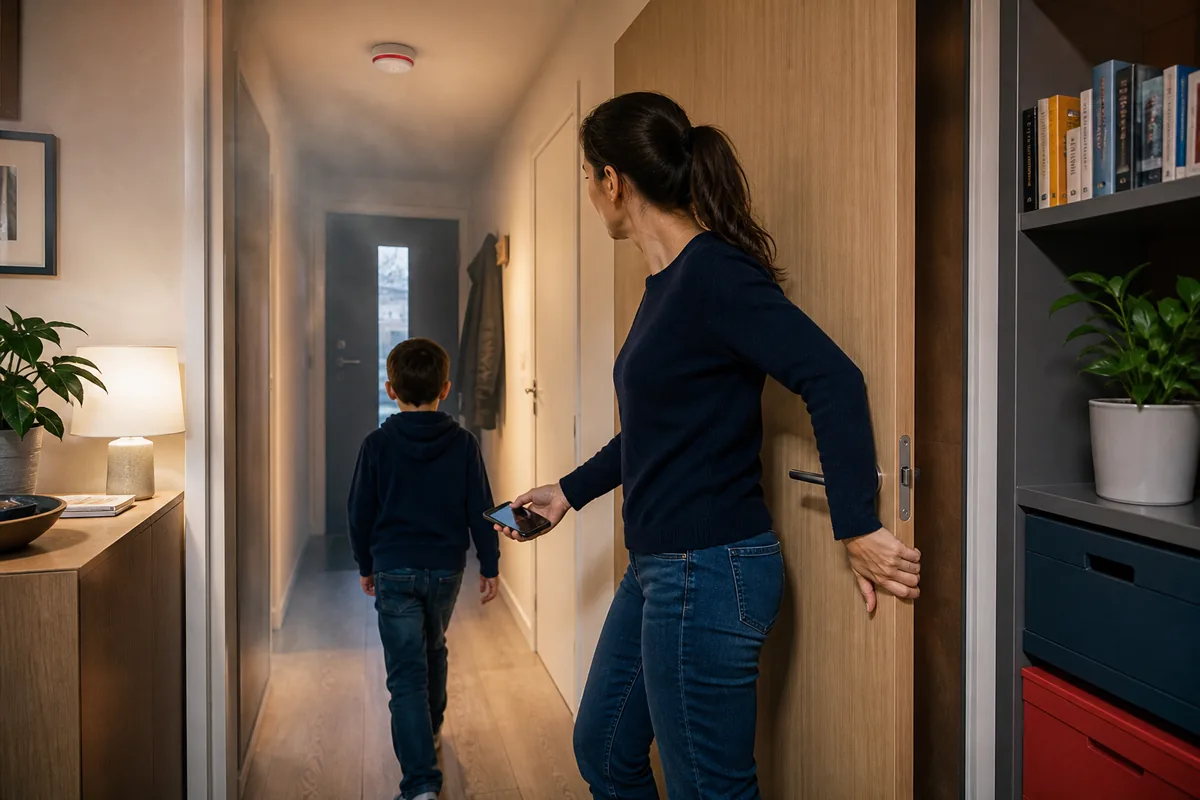
Si le feu est chez vous, quittez le logement dès que le chemin le permet et fermez la porte derrière vous sans la verrouiller. Si de la fumée remplit la pièce où vous êtes, restez près du sol en rejoignant un endroit sûr. Prévenez les autres occupants si vous le pouvez en sortant.
Si le feu est ailleurs dans l’immeuble et que les parties communes sont enfumées, gardez la porte du logement fermée. Renforcez son étanchéité avec des linges humides si vous en avez à portée de main. Appelez le 18 ou le 112 en donnant votre adresse, votre étage et votre emplacement, puis signalez votre présence à la fenêtre.
FFP2 or FFP3 masks should not be presented as a solution against a fire. They filter particles in certain contexts, but do not protect against carbon monoxide, hot gases or an oxygen-depleted atmosphere.
Prevention: DAAF, maintenance, fuels and scenarios
Prevention begins with a functional autonomous smoke alarm detector, maintained electrical and gas installations, vigilance on power strips, chargers, heating appliances, fireplaces, candles, cigarettes and flammable products.
In a CBRN DEFENSE SYSTEMS logic, the fire page completes the chemical risks: fumes may contain irritating or toxic products, soot can contaminate surfaces and waste after disaster must be treated with caution.
For companies, ERPs and communities, the challenge is to have legible evacuation instructions, an assembly point, contact persons, unobstructed access, visitor information and controlled recovery after smoke or soot.
Forest fires: anticipate around the building
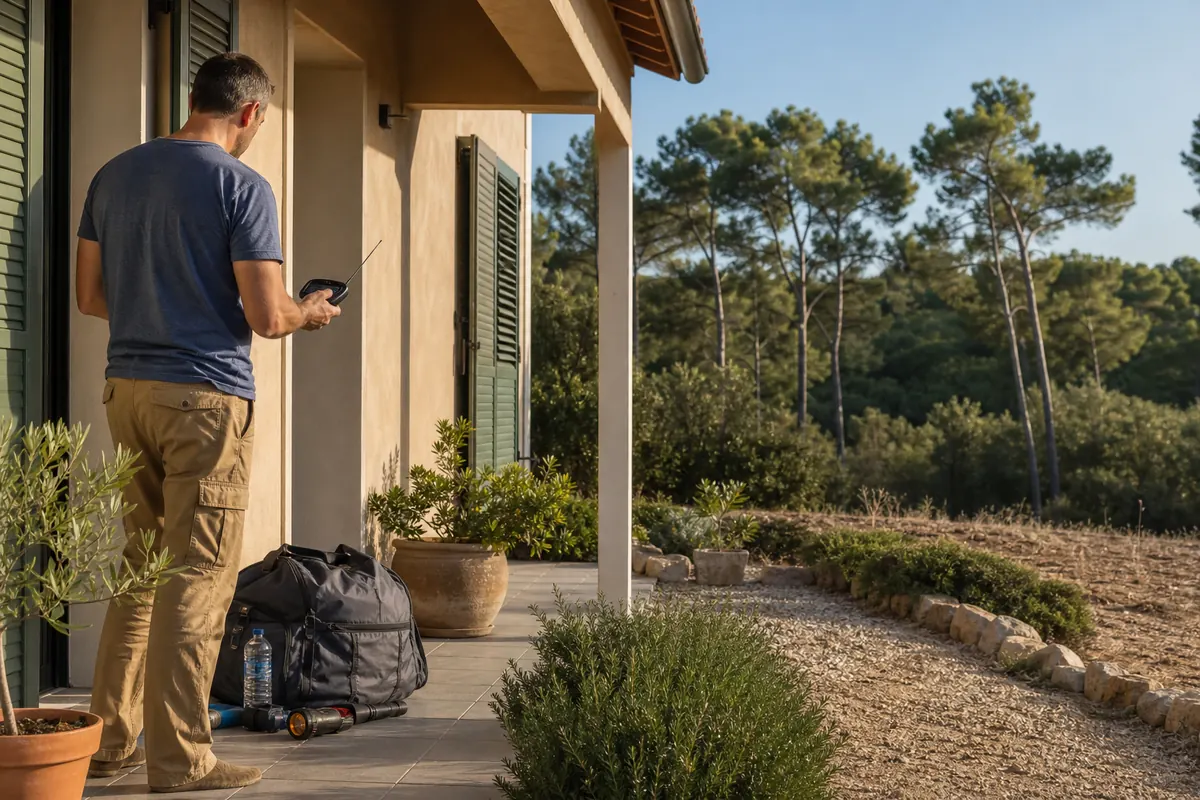
Vegetation fires add another risk: flames, external smoke, radiant heat, evacuation on order, closing of openings, storage of fuels and easy access to emergency services.
In the areas concerned, clearing of brush and preparation of the ground are part of the protection. During the event, you must follow the messages from the town hall, the prefecture, the fire brigade or the police.
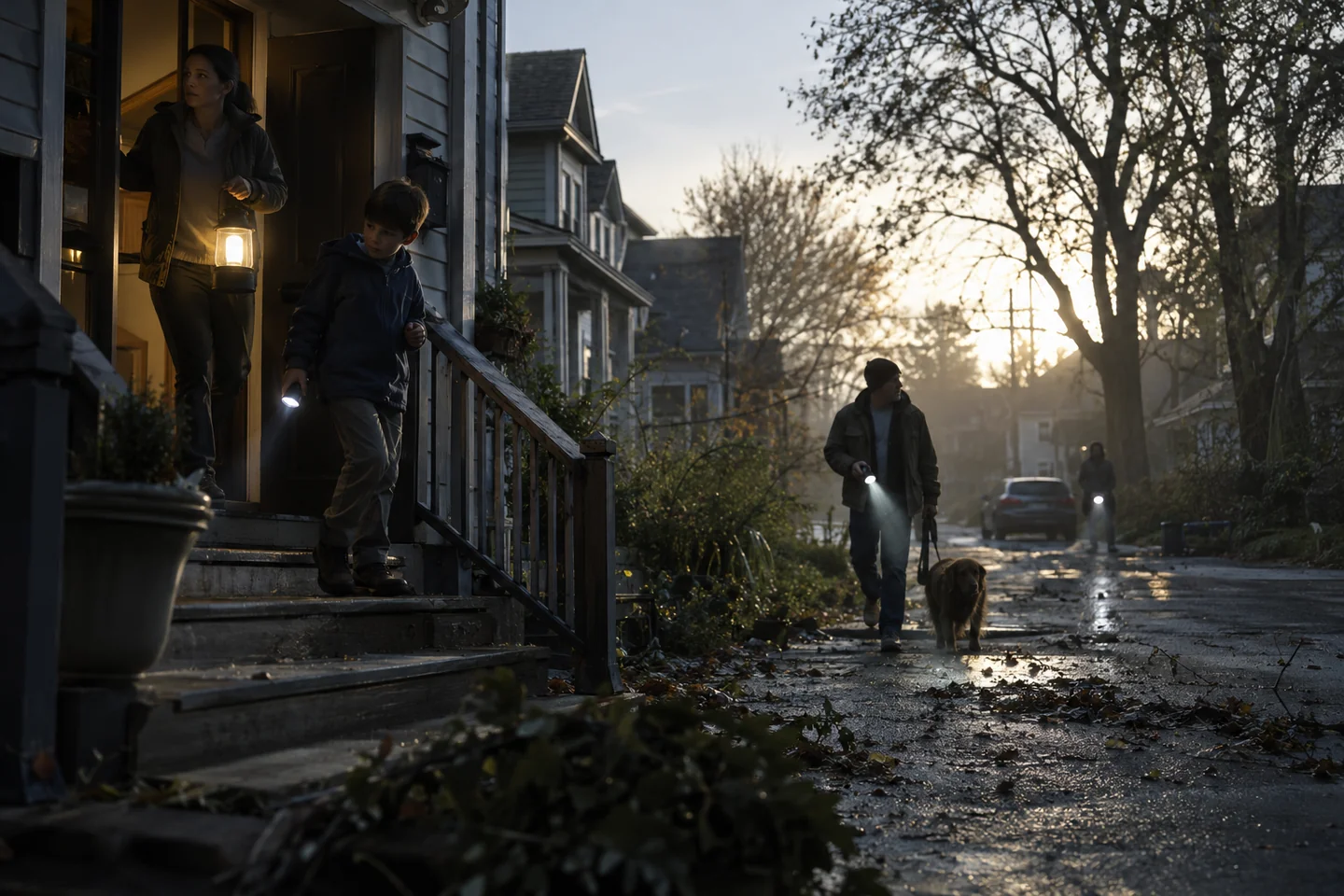
The important reflex remains the same: do not improvise a departure or an intervention if the authorities ask you to stay sheltered in a solid building.
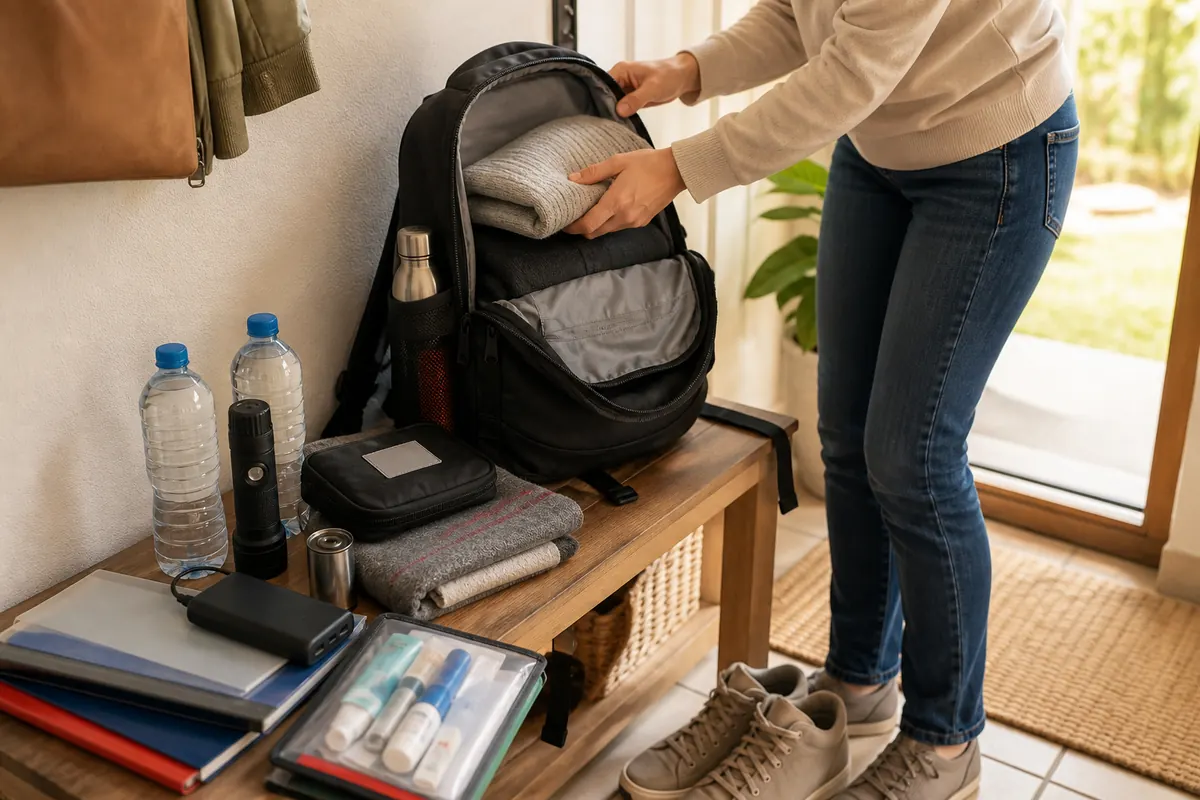
Prepare the first minutes, the ones that count more
A maintained detector takes time, but everyone must know what to do with the signal. At night, go out without looking for objects, close the doors behind you if it does not slow you down, and return to the assembly point. Do not use the elevator and never return to a smoky building.
If the exit route is filled with smoke, stay in a room, close the door, seal as instructed and report to a window. Call 18 or 112. An ordinary filter mask does not protect against toxic gases or lack of oxygen.
After the fire, do not enter without authorization. Structures, electricity, soot and firefighting water can still pose a danger. Contact the insurance company, keep the useful evidence and ask for professional advice for cleaning.
Occupants must be able to perceive an alarm
A sound-only alarm may not meet the needs of a deaf or hard-of-hearing person. French public guidance describes adapted smoke alarms using light or vibration. Selection depends on the person, rooms and use conditions; a phone alone is not automatically an equivalent relay.
Follow the instructions for testing and backup power. A test button does not assess every fire scenario. Also prepare human assistance and the exit route; never use smoke to test the household’s reaction.
Useful data at a glance
Orders of magnitude and simple controls to adapt to your situation. Local instructions always remain a priority.
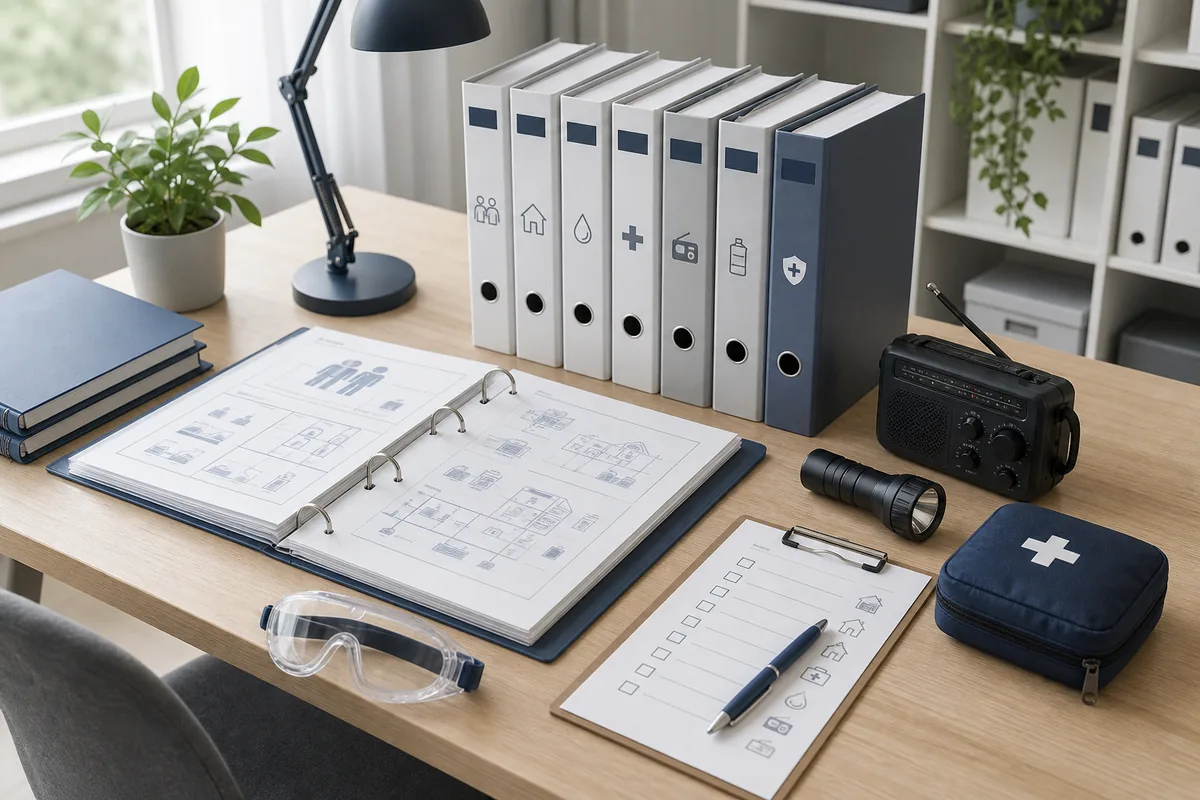
Fire alert
From a safe area, with the address precise.
Detector recommended
To be tested regularly according to its instructions.
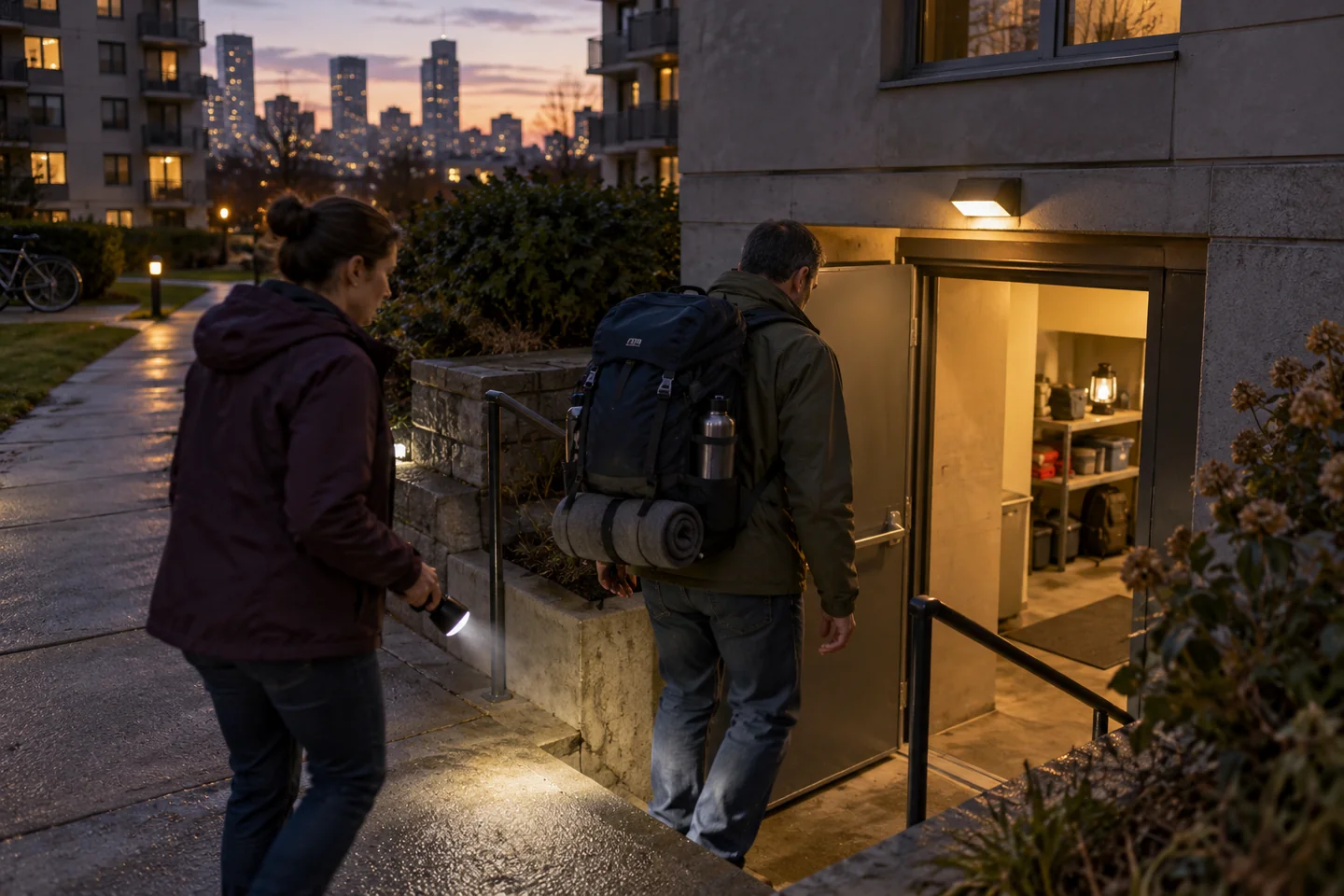
In a smoky building
Even to recover an object or an animal.
Quick check before you need it
- Test the detectors and know their signal
- Keep keys and exits accessible
- Define an assembly point
- Know how to call and give the address
- Do a quiet exercise, also at night
Recommended situations and routes
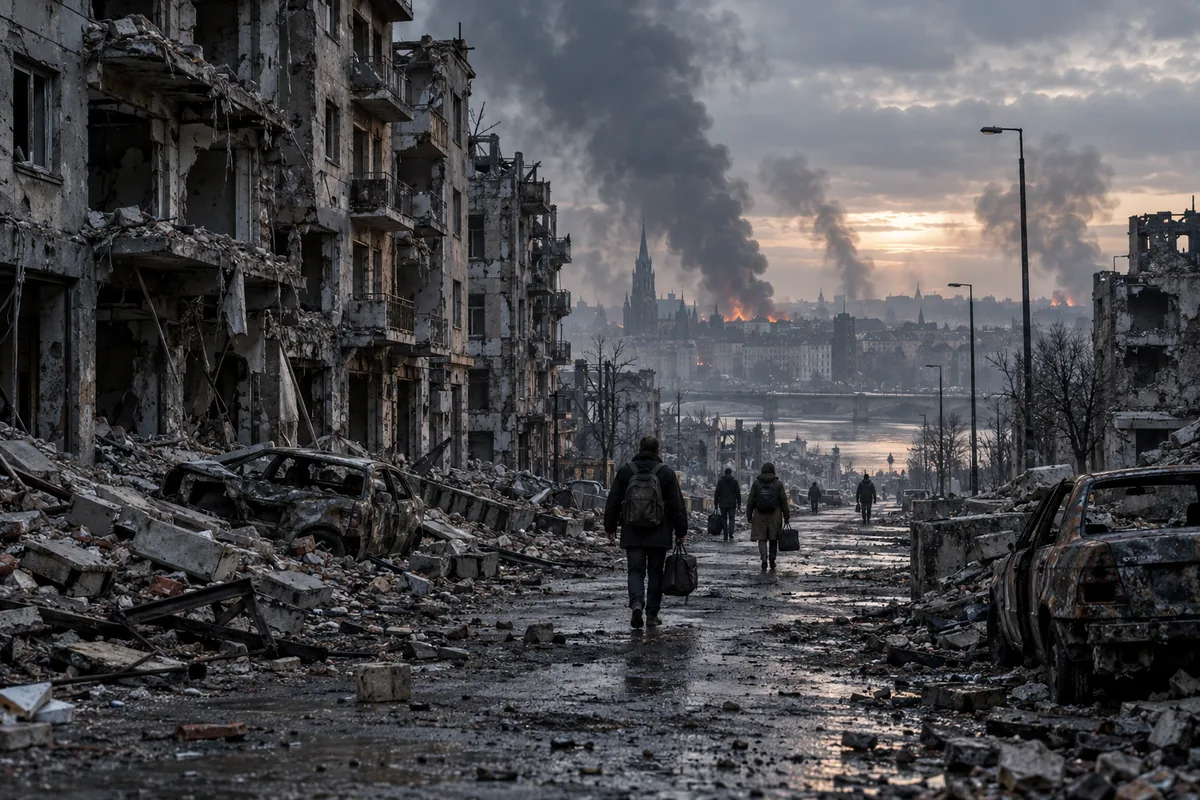
Fire at home
Evacuate if the path is passable, close the door, do not take the elevator, warn occupants and call for help.
Go deeper: Fire at home
Smoky staircase
Si le feu est ailleurs dans l’immeuble, rester derrière la porte fermée, appeler les secours et se signaler à la fenêtre.
Probe: Smoked staircase
Forest fire
Close openings, follow instructions, prepare for departure if requested and only return to evacuated accommodation after authorization.
Go deeper: Forest fire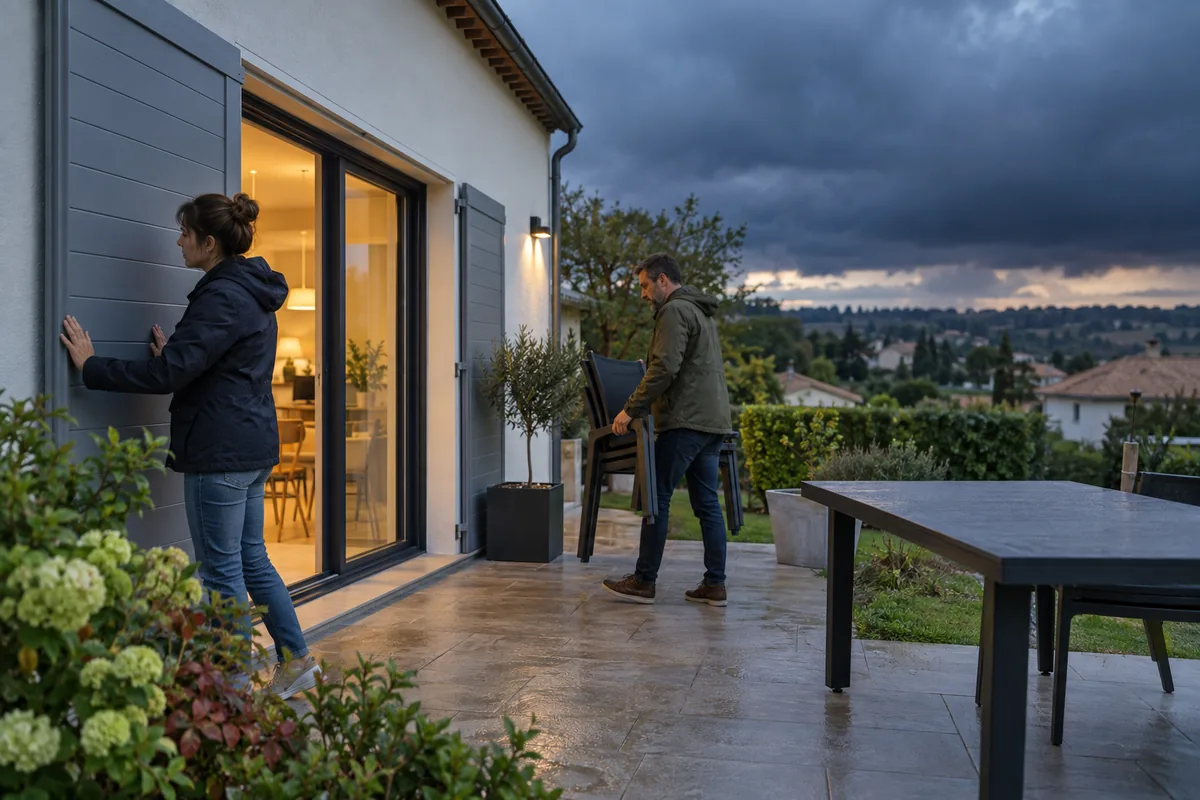
FAQ Fires / smoke
Quick responses to compare uses, limits and protection priorities.
Does an FFP2 protect against smoke?
No against the main danger. It can filter some particles, but not toxic gases or carbon monoxide. Faced with smoke, you must stay safe.
Should we always evacuate?
Si le feu prend chez vous, évacuez dès que vous pouvez rejoindre un endroit sûr. Si le feu est ailleurs dans l’immeuble et que l’escalier est enfumé, restez chez vous derrière la porte fermée, appelez les secours et signalez-vous.
Why close the doors?
Closing doors can slow the spread of smoke and fire, reduce transfers and temporarily protect a waiting area.
Should we try to put out a fire?
Only if it is very limited, if you have the appropriate means and if an exit remains immediately accessible. Otherwise, evacuate, close the door and call emergency services.
References used for this guide
 Civil security - Domestic fire
Prevention of domestic fires, smoke detector, evacuation, call 18 or 112, shelter if common areas are smoked.
Civil security - Forest fire
Preparation of homes, clearing of brush, closing of vents, following instructions and evacuation only according to the situation and the authorities.
Ministry of the Interior - Forest fire prevention
Prevention advice, preparation of the house, behavior around the home or in the car and reminder to follow the fire brigade or the police.
Civil security - 72-hour emergency kit
Family or professional preparation, short-term autonomy, radio, water, medicines, documents and regular checking of the kit.
 INRS - Toxicity of fire smoke
Documentary reference on the toxic effects of fire smoke and the importance of specialized respiratory protection for qualified responders.
Explore more CBRN guides