In the event of a nuclear alert, the priority is to take shelter, close doors, windows and vents if requested, follow official channels and prepare an evacuation only on order. Stable iodine should only be taken when requested by authorities.
Containment does not mean improvised total isolation
Containment consists of taking shelter in a building, reducing exchanges with the outside world if requested by the authorities, listening to official messages and avoiding unnecessary travel. It may precede an evacuation on order or a lifting of the restriction.
In a radiological context, dust or particles can contaminate clothing, hair, skin or objects. Simple PPE can limit certain transfers if an authorized exit is necessary, but they do not protect against all radiation.
Stable iodine responds to a specific case : saturation of the thyroid in the face of radioactive iodine. Its decision depends on the type of accident, the time limit and the instructions. It should not be decided alone.
Prepare the house or site
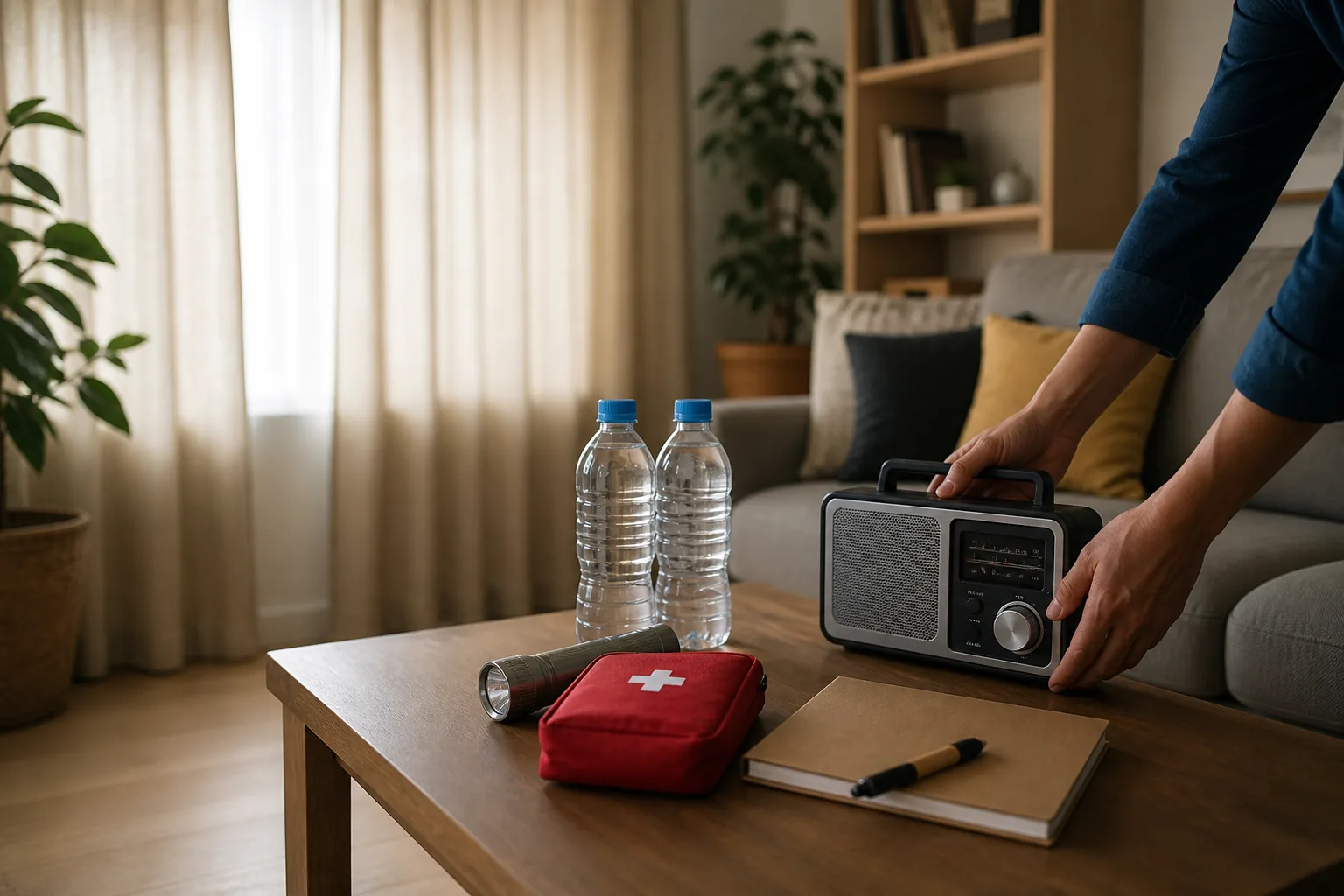
Locate an interior room or one that is easy to close, keep a radio, a lamp, water, treatments, documents, a change of clothes and bags to isolate elements potentially contaminated.
If a person returns after possible exposure to dust, the defensive logic is to gently remove the outer layers, isolate them, wash and wait for control or treatment instructions.
For an establishment, it is necessary to provide a calm communication, posted instructions, a contact person, a list of people present and a plan for vulnerable groups.
Organize shelter without waiting for an alert
Locate in advance a room that is easy to access, with few openings, without trying to transform the accommodation into a waterproof shelter. Keep a radio, a lamp, water, necessary treatments, bags and something to keep the children busy there or nearby. The goal is to be able to gather together quickly and listen to instructions.
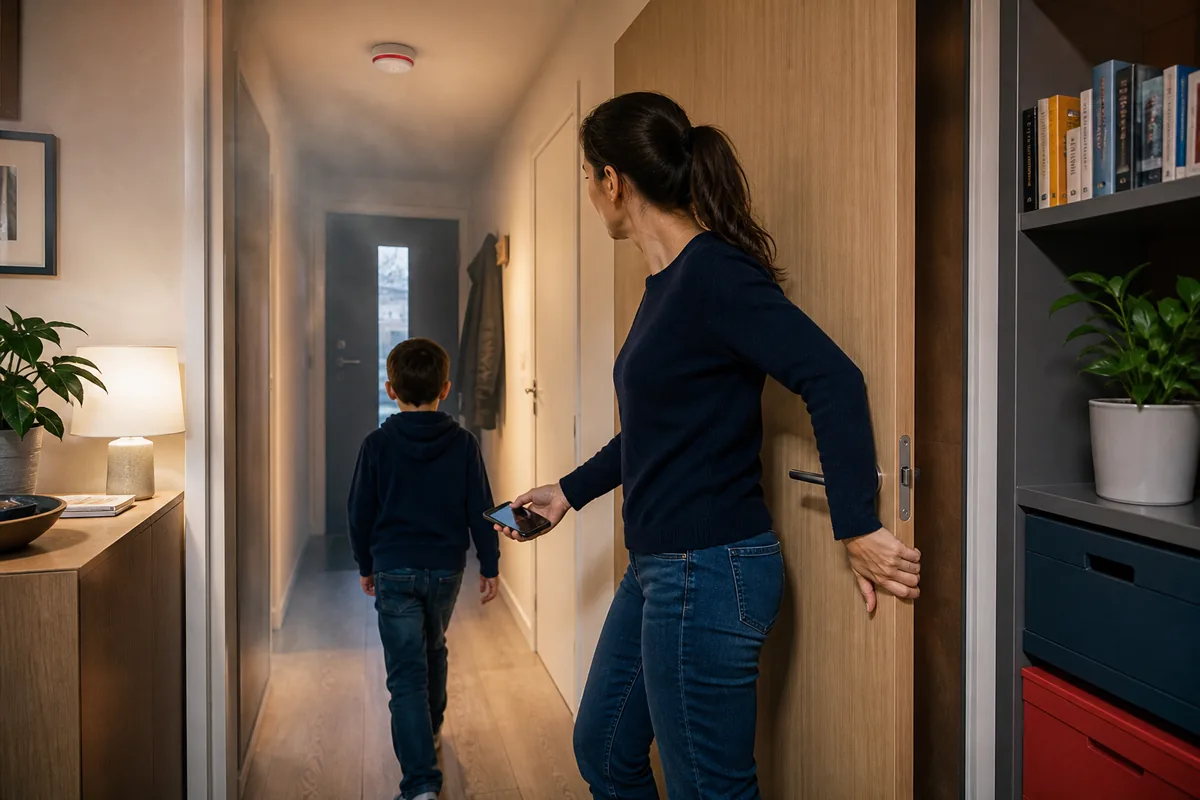
Each adult in the household must know how to stop ventilation if the authorities request it, where the papers are located and how to contact loved ones without clogging up the lines. A brief message sent to the family may be enough: location, condition of people and awaiting instructions. Avoid going out to observe the situation or retrieve a secondary object.
Iodine tablets only protect the thyroid against certain radioactive iodines and for a specific period of time. They constitute neither a general antidote nor a reason to ignore containment or evacuation. Their taking depends imperatively on the instructions of the authorities.
Reading a measurement: identify the quantity first
A becquerel describes radioactive activity, a gray the energy absorbed per unit mass, and a sievert an equivalent or effective dose. There is no universal conversion between these units.
Also distinguish dose from dose rate: µSv and µSv/h describe different quantities. When comparing readings, retain the full unit, location, time and measurement context. A single number cannot determine whether to take iodine or return to an area.
External irradiation alone does not mean that radioactive substances are present on a person. External contamination means material is deposited on skin or clothing; internal contamination means it has entered the body. A number displayed by an instrument cannot distinguish these situations without knowing what was measured.
| Unit | Quantity | Reference |
|---|---|---|
| Bq | Source activity | 1 Bq = one disintegration per second. |
| Gy | Absorbed dose | 1 Gy = 1 joule per kilogram. |
| Sv | Equivalent or effective dose | 1 mSv = 1,000 µSv; interpretation depends on the exposure. |

Useful data at a glance
Orders of magnitude and simple controls to adapt to your situation. Local instructions always remain a priority.
To wait
Shelter, evacuation or iodine depending on the authorities.
According to profile
The dosage depends in particular on age and the order received.

For iodine
Never anticipate taking without official instructions.
Quick check before you need it
- Entering a building
- Close openings and ventilation if requested
- Leave children in their establishment
- Prepare radio, water and treatments
- Wait for the order before taking iodine
Recommended situations and routes
Alert near an installation
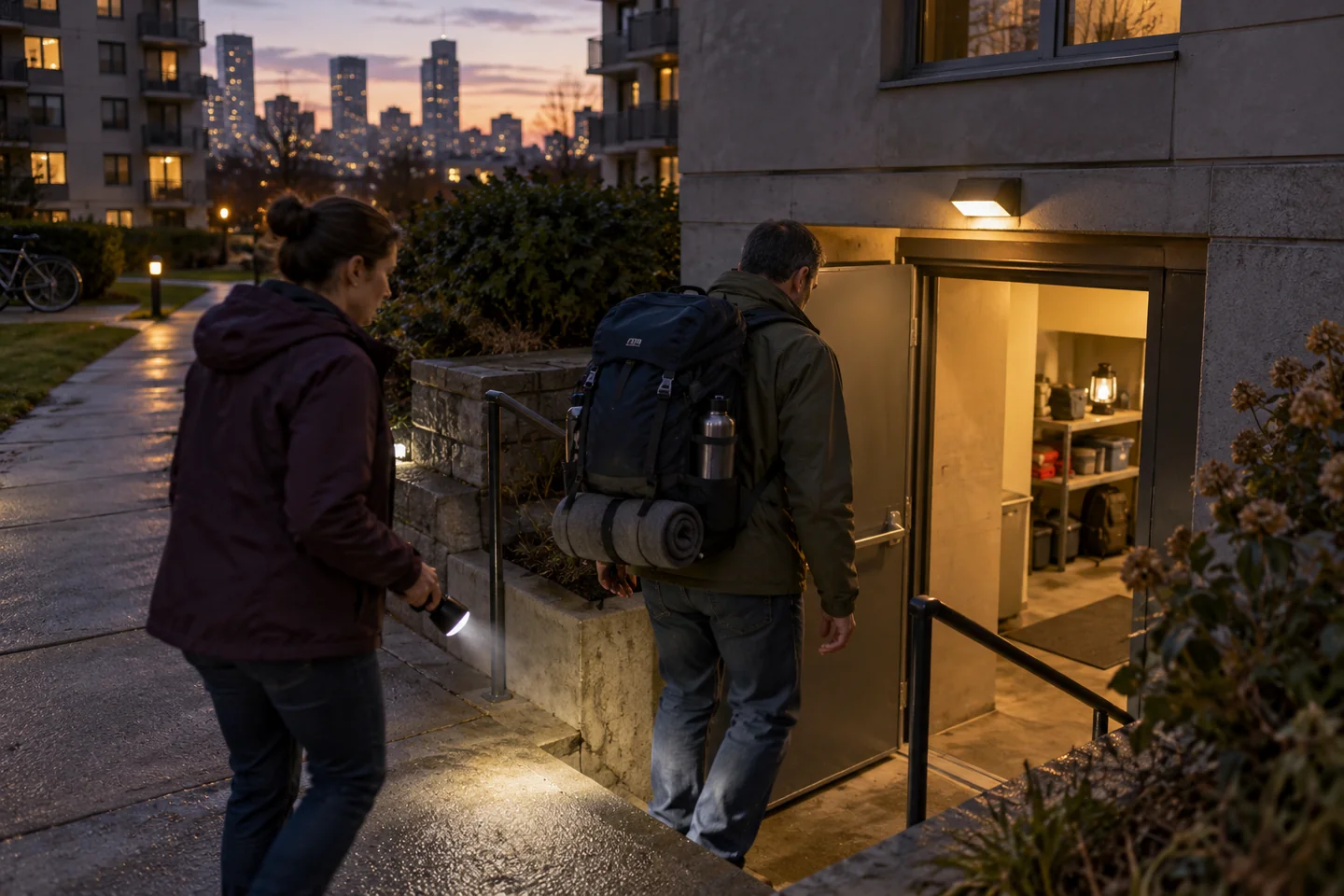
Take shelter, close openings if requested, listen to the authorities, prepare iodine or evacuation only on order.
Go deeper: Alert near an installation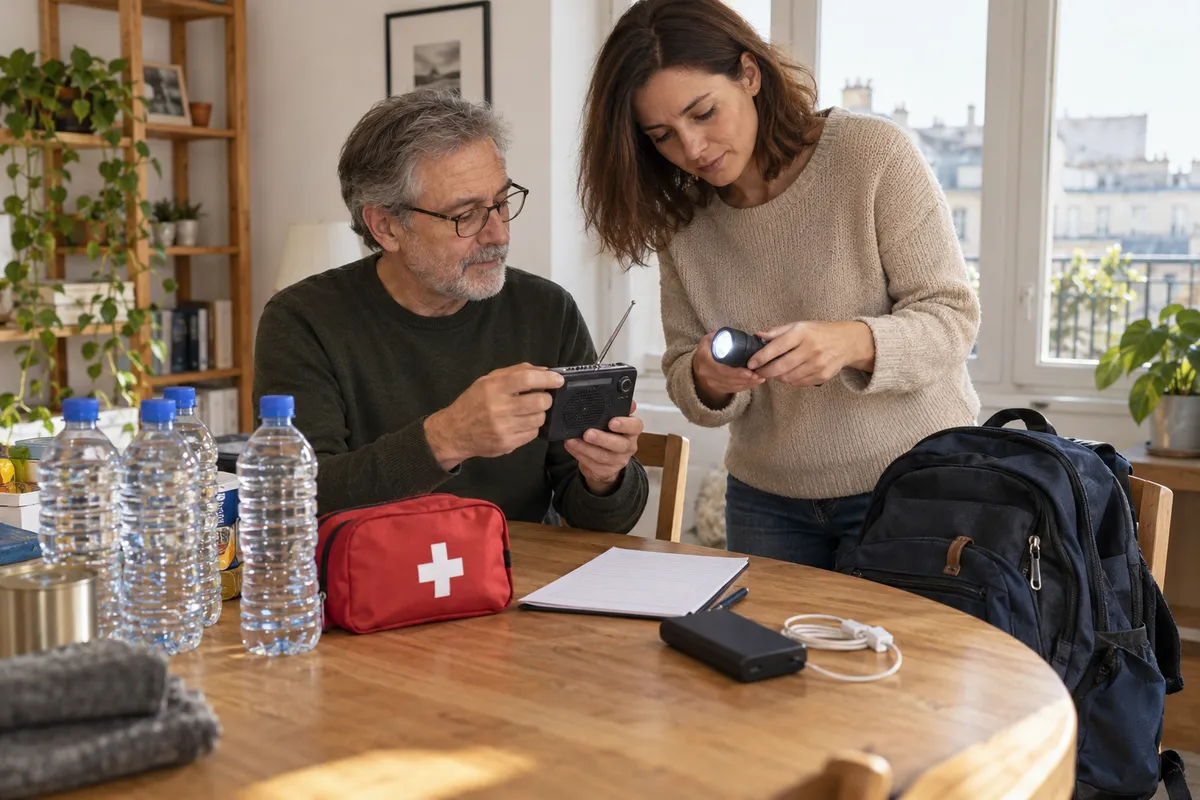
Necessary exit authorized
Cover skin and hair, limit the duration, avoid dust and remove the outer clothing upon return.
Deep deeper: Necessary exit authorized
Family preparation
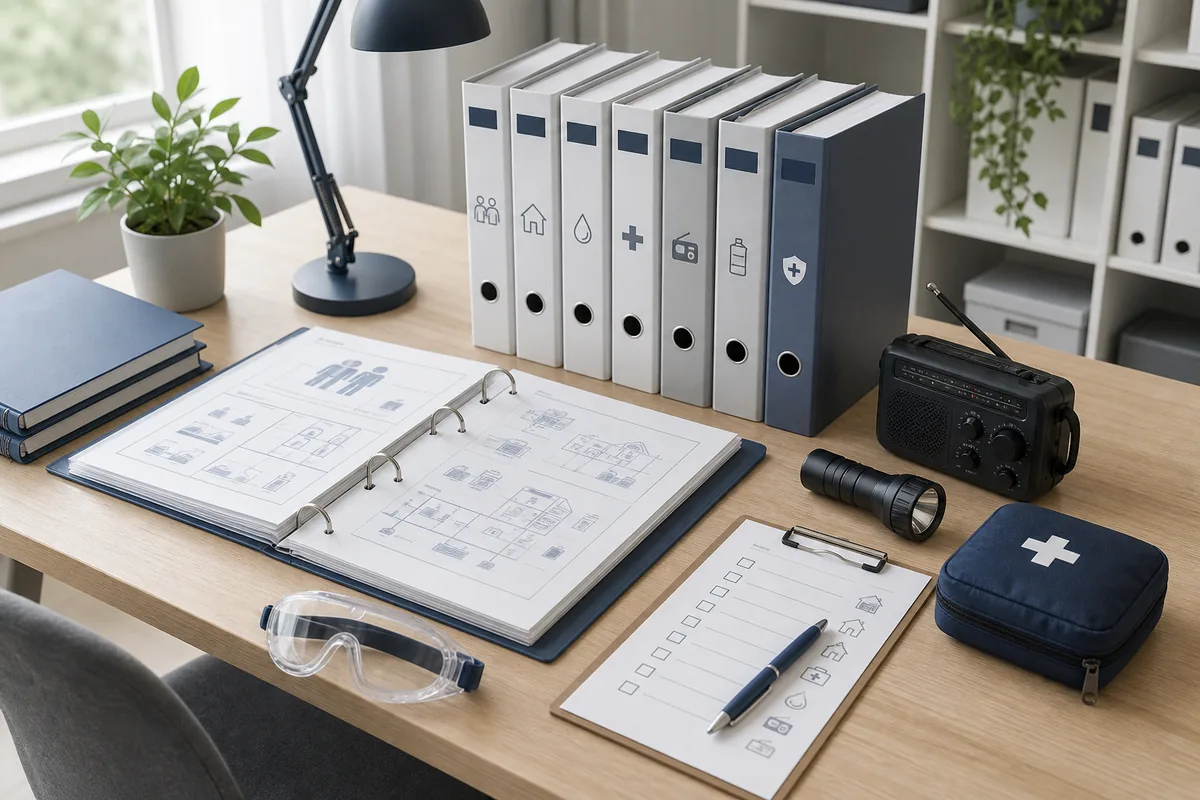
72-hour kit, radio, water, treatments, documents, change of clothes and list of contacts.
Deep: Family preparation
Nuclear / Iodine FAQ
Quick responses to compare uses, limits and protection priorities.
When to take stable iodine?
Only when the authorities request it, depending on the scenario and the people concerned.
Does a mask protect against radiation?
A particulate mask can limit the inhalation of dust, but it does not block all radiation.
Should we evacuate as soon as the alarm is heard?
No. Evacuation must be done on order. Going out at the wrong time can increase exposure.
Should a room be made completely airtight?
No. Follow official instructions, close openings and stop ventilation if requested. Do not undertake improvised work which could create other dangers.
References used for this guide
 Civil security - Nuclear accident
Preparation, containment, evacuation on order and iodine intake only according to official instructions.
Civil security - 72-hour emergency kit
Family or professional preparation, short-term autonomy, radio, water, medicines, documents and regular checking of the kit.